By Scott Neill | Published: April 6, 2026 | Last Updated: July 2026
Quick Summary
This article explains when homeowners insurance in Texas covers mold damage, emphasizing that mold coverage depends on whether the underlying water damage is covered. It clarifies why most mold claims are denied due to slow leaks or maintenance issues and guides homeowners on what specific water-related coverages to check in their policies to ensure protection.
Key Takeaways:
- Mold damage is covered only if it results from a sudden, accidental water event that your insurance policy covers, not from slow leaks or long-term moisture.
- Most mold claims are denied because mold typically develops from maintenance issues like slow leaks or poor ventilation, which insurance does not cover.
- Check your policy’s declarations page for water damage, sewer and drain backup, and service line coverage to confirm if common causes of mold are protected.
- Texas heat and humidity speed up mold growth, making timely water damage coverage critical to avoid costly mold remediation expenses.

Having spent 10 years as a captive agent before founding Neill Insurance Brokers, Scott Neill has reviewed residential policies for hundreds of North Texas homeowners. In 2026, Texas home insurance covers mold only if caused by a sudden, accidental event like a burst pipe. Slow leaks and humidity issues are excluded as maintenance. Most policies cap remediation at $5,000, so adding a mold endorsement is essential to cover the high cost of professional cleanup and state-mandated certification.
Does Homeowners Insurance Cover Mold in Texas?
Mold is only covered if the cause of the water damage is covered.
That is the key point most homeowners miss.
- If mold comes from a sudden and accidental event, it may be covered
- If mold comes from a slow leak or long term moisture, it is usually not covered
Why Most Mold Claims Are Denied
Mold rarely starts with a dramatic event.
It usually begins with slow, hidden moisture.
Common examples:
- A slow leak under a sink
- A cracked pipe behind a wall
- Poor attic ventilation causing condensation
By the time you see or smell mold, it has often been developing for weeks or months.
Insurance companies classify this as maintenance, not a sudden loss.
And maintenance issues are not covered.
The Real Issue, Water Coverage Determines Mold Coverage
Mold follows water.
If your policy does not properly cover water damage, it will not cover mold.
This is where many Texas homeowners run into problems.
Standard homeowners policies vary widely in how they handle water damage. Some cover sudden events well, others have gaps, and many exclude common causes entirely.
The difference is not always obvious until a claim happens.
Why This Matters More in Texas
North Texas heat and humidity accelerate mold growth.
Mold can begin forming within 24 to 48 hours after water exposure.
That means even a small water event can quickly turn into a major remediation project.
Typical mold cleanup costs:
- $5,000 to $25,000 depending on severity
If your policy does not cover the water source, none of that cost is covered.
What to Check on Your Policy Right Now
You can verify your coverage in just a few minutes.
- Open your declarations page
- Look for water related coverages
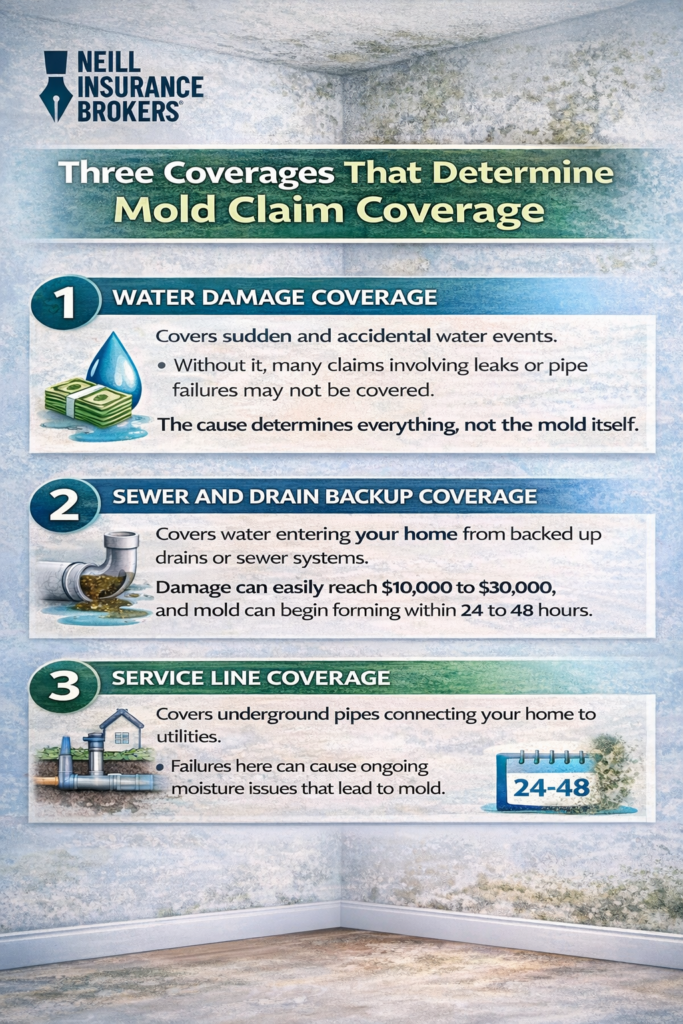
- Check for these specifically:
- Water damage coverage
- Sewer and drain backup
- Service line coverage
If these are missing, your policy likely does not cover the most common causes of mold.
Many lower cost policies exclude these protections, which is one reason premiums can appear lower.
How to Reduce Your Risk
You cannot eliminate the risk of mold, but you can reduce your financial exposure.
- Make sure your policy includes key water endorsements
- Address leaks and moisture issues immediately
- Review your policy annually as your home changes
Frequently Asked Questions
Does homeowners insurance cover mold in Texas?
Only if the mold is caused by a covered water event. Otherwise, it is typically excluded.
Is mold from a slow leak covered?
No. Slow leaks and long term moisture are considered maintenance issues and are not covered.
What type of water damage is covered?
Sudden and accidental water damage is usually covered, depending on your policy and endorsements.
How fast can mold grow in Texas?
Mold can begin forming within 24 to 48 hours due to heat and humidity.
How do I know if my policy covers mold risks?
Check your policy for water damage, sewer backup, and service line coverage. These determine most outcomes.
Know What Causes the Claim Before You Need It
If you have ever assumed mold would be covered under your homeowners insurance, you are not alone. Many Texas homeowners only learn the truth after a claim is denied.
Now you understand that mold coverage depends on the source of the water, what endorsements you have, and how your policy is structured. You also know how quickly mold can become a costly problem in Texas.
The next step is simple. Know what your policy actually covers before you need it.
At Neill Insurance Brokers, we help homeowners review their coverage, identify gaps, and make sure their policy protects them from real world risks.
If you want confidence in your coverage, schedule a free policy review and see exactly where you stand.
